
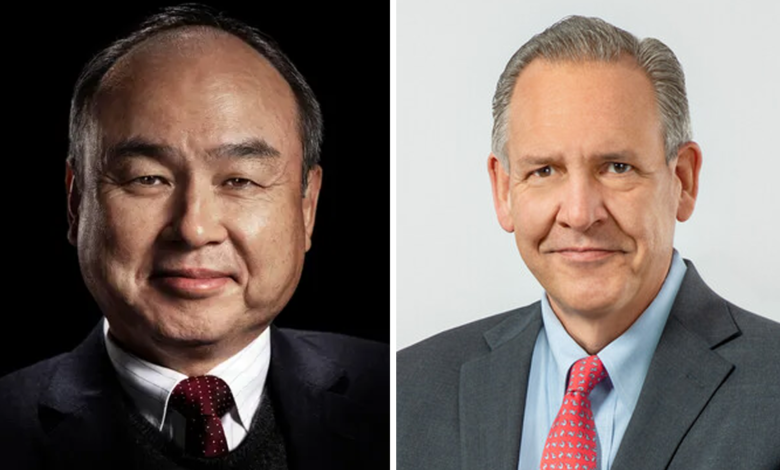
In the world of global business, some of the most interesting stories emerge when leaders from completely different industries cross paths. Masayoshi Son and Greg Hayes represent two distinct approaches to leadership, investment, and corporate growth. Son, the founder of SoftBank Group, is known for his ambitious technology investments and long-term vision. Hayes, the former chief executive of RTX Corporation (formerly Raytheon Technologies), built his reputation in aerospace, defense, and industrial management.
But what connects these two influential executives? Their professional worlds offer an intriguing look at how technology investment, corporate strategy, and industrial innovation intersect. Understanding their backgrounds helps explain why their names may appear in discussions about global business and technological change. This article explores their careers, leadership styles, business interests, and the broader context behind their professional significance—while separating documented facts from assumptions about a direct business relationship.
Featured Snippet: Who Are Masayoshi Son and Greg Hayes?
Masayoshi Son is a Japanese entrepreneur and founder of SoftBank Group, known for investing in technology companies. Greg Hayes is an American business executive who previously led Raytheon Technologies, now RTX Corporation. Both have influenced major industries, but their careers followed different paths, and their names alone do not establish a direct partnership.
Biography in Columns
| Category | Masayoshi Son | Greg Hayes |
|---|---|---|
| Full name | Masayoshi Son | Gregory J. Hayes |
| Nationality | Japanese | American |
| Profession | Entrepreneur and investor | Corporate executive |
| Known for | Founding SoftBank Group | Leading United Technologies and Raytheon Technologies |
| Industry | Technology, telecommunications, investment | Aerospace, defense, industrial manufacturing |
| Leadership focus | Long-term technology investment | Operational performance and industrial strategy |
| Major organization | SoftBank Group | RTX Corporation |
| Career identity | Technology investor and founder | Aerospace and defense executive |
These two leaders illustrate how different business backgrounds can shape corporate decision-making. Son’s career has centered on identifying technologies that could transform entire industries, while Hayes’s executive experience has involved managing complex industrial businesses, large workforces, and demanding operational requirements.
What Is the Connection Between Masayoshi Son and Greg Hayes?
The keyword “Masayoshi Son and Greg Hayes” suggests a possible business connection between two prominent executives. However, it is important to distinguish between a documented corporate relationship and a comparison based on their professional influence.
Son built SoftBank into a major investment and technology group. Hayes, meanwhile, led major aerospace and industrial organizations, including United Technologies and Raytheon Technologies. Their careers intersect conceptually through the broader business environment, where technology, capital, manufacturing, and innovation increasingly influence one another.
Why Their Names May Appear Together
There are several reasons readers might search for both executives:
- Corporate leadership: Both have held senior positions in globally significant companies.
- Technology and innovation: Their industries are affected by advances in computing, automation, and digital infrastructure.
- Investment and business strategy: Son’s investment approach and Hayes’s corporate management experience offer different perspectives on growth.
- Global business developments: Large technology and industrial companies operate within interconnected markets.
Still, these shared themes do not prove that Son and Hayes completed a joint transaction, formed a strategic alliance, or worked together directly. Any claim of a specific deal should be supported by company announcements or reliable reporting.
The most useful way to understand their business story is to examine their individual careers and the industries they helped shape.
Masayoshi Son: The Visionary Behind SoftBank
Masayoshi Son is one of Japan’s most internationally recognized entrepreneurs. He founded SoftBank in 1981, initially building a business connected to software distribution before expanding into telecommunications, technology, and investment.
Over time, SoftBank developed into a major global investment group. Son became particularly well known for backing technology companies that he believed could reshape the future.
How Son Built His Business Influence
Son’s strategy has often involved identifying long-term technological shifts before they become mainstream. Rather than focusing exclusively on established businesses, he has pursued companies working in emerging or rapidly expanding sectors.
His business interests have included:
- Telecommunications and digital infrastructure
- E-commerce and online platforms
- Artificial intelligence and advanced computing
- Robotics and automation
- Technology-focused venture investment
One of SoftBank’s most prominent investment initiatives was the Vision Fund, which provided substantial capital to technology businesses around the world.
Son’s approach is often associated with high-conviction investing, meaning that he is willing to commit significant resources when he believes a company or technology has substantial long-term potential.
However, ambitious investment strategies also carry risks. Technology valuations can fluctuate dramatically, and even promising companies may struggle to achieve sustainable profitability.
Son’s career therefore offers an important business lesson: vision can create opportunity, but financial discipline and execution remain essential.
Greg Hayes: A Leader in Aerospace and Industrial Management
Greg Hayes developed his career in finance and corporate management, eventually becoming one of the most prominent executives in the aerospace and defense sector.
He served as chief executive of United Technologies Corporation before the company combined with Raytheon Company in 2020. The resulting business, Raytheon Technologies, was later renamed RTX Corporation.
Hayes’s Approach to Corporate Leadership
Unlike Son, whose public reputation is strongly connected to technology investing, Hayes’s leadership experience has focused on managing large operating businesses.
His responsibilities involved areas such as:
- Financial performance and capital allocation
- Manufacturing and supply-chain management
- Corporate restructuring and integration
- Aerospace technology and defense systems
- Managing complex international operations
The combination of United Technologies and Raytheon created a major aerospace and defense company with businesses serving commercial aviation, defense, and other industrial markets.
Such a merger requires more than financial planning. It involves integrating operations, aligning corporate priorities, managing employees, and maintaining relationships with customers and government agencies.
Hayes’s career illustrates the importance of operational execution. In industries where products are technically complex and programs may run for years, consistent delivery, safety, quality, and financial oversight are central to business performance.
How Their Business Worlds Overlap
Although Son and Hayes are associated with different industries, their careers reflect several shared forces shaping modern business. Technology is no longer limited to software companies. It has become central to manufacturing, aviation, defense, communications, and global infrastructure.
1. Technology as a Driver of Growth
SoftBank’s investment strategy has emphasized technologies with the potential to change how businesses and consumers operate. In aerospace and defense, technological progress also plays a central role, influencing aircraft systems, communications, automation, and advanced computing.
The difference lies in how technology enters their business models. Son has generally approached innovation through investment and ownership stakes in technology companies. Hayes’s executive experience centered on developing, producing, and delivering sophisticated industrial products.
2. Capital Allocation and Long-Term Strategy
Both investment groups and industrial corporations must decide where to direct financial resources.
For a technology investor, the challenge is identifying companies with sustainable growth potential. For an industrial executive, the challenge includes balancing research and development, production costs, customer commitments, and shareholder expectations.
Their careers highlight two different but related questions:
- Where should a business invest for future growth?
- How can that investment translate into measurable, sustainable results?
These common challenges make their professional backgrounds useful to compare, even without evidence of a direct partnership.
Masayoshi Son vs. Greg Hayes: Leadership Compared
Comparing Son and Hayes reveals different approaches to managing risk, innovation, and organizational growth. Their differences are shaped largely by the industries in which they built their careers.
| Business factor | Masayoshi Son | Greg Hayes |
|---|---|---|
| Primary focus | Technology investment | Aerospace and industrial management |
| Business approach | Investment-led growth | Operational and corporate leadership |
| Risk exposure | Market and investment volatility | Production, integration, and program risks |
| Growth strategy | Backing emerging technologies | Managing and expanding established businesses |
| Key challenge | Turning investments into lasting value | Delivering performance across complex operations |
What Businesses Can Learn From Both Leaders
Their careers demonstrate that there is no single formula for corporate growth.
Son’s investment-oriented background highlights the importance of recognizing technological opportunities and thinking beyond immediate market conditions. Hayes’s experience emphasizes the need for strong operations, financial controls, and disciplined execution.
For business owners, investors, and students, the practical lessons include:
- Understand the industry before investing. Different sectors have different risk profiles and timelines.
- Connect vision with execution. An ambitious strategy needs measurable goals and capable teams.
- Evaluate risk realistically. Growth opportunities should be assessed alongside financial and operational exposure.
- Adapt to changing conditions. Markets, technologies, and customer expectations evolve continuously.
These lessons are relevant regardless of whether a company operates in technology, manufacturing, or another sector.
The Broader Business Significance of Their Careers
The professional significance of Son and Hayes extends beyond their individual organizations. Their careers illustrate how different types of leadership contribute to the global economy.
The Growing Role of Technology in Traditional Industries
Industries once considered separate are becoming increasingly connected. Artificial intelligence, automation, data analysis, and advanced computing are influencing everything from investment decisions to industrial production.
For example, aerospace manufacturers rely on sophisticated software, digital systems, and advanced engineering. Technology investors, meanwhile, may fund businesses whose products eventually serve industrial customers.
This creates opportunities for collaboration across sectors, but it also introduces new challenges involving regulation, cybersecurity, capital requirements, and competition.
Why Their Careers Matter to Investors
Investors studying Son and Hayes can examine two distinct dimensions of business performance.
Son’s career raises questions about investment timing, valuation, and the ability of emerging technologies to generate long-term returns. Hayes’s career provides a perspective on managing established companies with significant operational responsibilities.
Neither approach guarantees success. The value of studying their careers lies in understanding how different strategies respond to different business environments.
For readers researching a possible connection between the two executives, the important distinction remains that similar business interests do not establish a documented partnership.
Pros and Cons of Their Business Approaches
Son and Hayes operated in different business environments, so their approaches should not be treated as directly interchangeable. Nevertheless, examining their professional backgrounds reveals potential advantages and challenges associated with their respective strategies.
Masayoshi Son’s Investment-Oriented Approach
Potential advantages:
- Exposure to emerging technologies and new markets
- Opportunities to support companies with significant growth potential
- Ability to diversify investments across multiple sectors
Potential challenges:
- High exposure to volatile technology valuations
- Uncertainty surrounding the profitability of emerging businesses
- Significant financial risk when investments fail to meet expectations
Greg Hayes’s Corporate Management Approach
Potential advantages:
- Emphasis on operational performance and financial oversight
- Experience managing large, complex organizations
- Focus on established customer relationships and industrial capabilities
Potential challenges:
- Complex supply chains and manufacturing requirements
- High costs associated with research, development, and production
- Difficulties involved in integrating large corporate businesses
These are general characteristics of their respective business environments, not a complete assessment of either executive’s performance. Actual results depend on specific decisions, market conditions, and company circumstances.
How to Research the Masayoshi Son and Greg Hayes Business Story
Readers looking for a specific connection between these executives should use a structured research process rather than relying on search-engine headlines alone.
A Step-by-Step Research Guide
Step 1: Identify the original claim. Determine whether the article or discussion refers to a meeting, investment, corporate agreement, or simply a comparison.
Step 2: Check the relevant companies. Identify whether the claim concerns SoftBank, United Technologies, Raytheon Technologies, or another organization.
Step 3: Establish the timeline. Confirm when the reported event occurred and whether both executives held relevant leadership positions at that time.
Step 4: Look for documentary evidence. Corporate announcements, regulatory filings, earnings materials, and credible business reporting can help establish what actually happened.
Step 5: Separate facts from interpretation. A shared industry interest is not proof of a formal partnership. Similarly, a reported meeting does not automatically indicate a financial agreement.
This approach is particularly useful when researching business personalities whose names appear together in online articles without a clear explanation.
Also Read: Charles Donald Fegert: The Story Behind the Name Revealed
Conclusion
The story of Masayoshi Son and Greg Hayes offers a useful perspective on two different forms of business leadership. Son built his reputation through technology investments and ambitious growth strategies, while Hayes became known for managing major aerospace and industrial organizations.
Their careers demonstrate how innovation, financial planning, operational discipline, and long-term thinking shape modern businesses. Although their professional backgrounds share broader themes, a direct business partnership should not be assumed without supporting evidence.
For readers exploring this keyword, the key is to understand both executives individually while distinguishing documented connections from general comparisons. The most meaningful business stories are built on verified facts, not assumptions.
Frequently Asked Questions (FAQs)
1. Who are Masayoshi Son and Greg Hayes?
Masayoshi Son is a Japanese entrepreneur and the founder of SoftBank Group, known for technology investments. Greg Hayes is an American business executive who previously led United Technologies and Raytheon Technologies. Both have held influential leadership positions, but their careers developed in different industries.
2. Are Masayoshi Son and Greg Hayes business partners?
Their names may appear together in business discussions, but that alone does not establish a formal partnership. A specific business relationship should be confirmed through reliable reporting, corporate announcements, or other documentary evidence. Their professional backgrounds can be compared without assuming they jointly conducted business.
3. What is Masayoshi Son best known for?
Masayoshi Son is best known for founding SoftBank and building it into a major technology investment group. He has invested in businesses across telecommunications, artificial intelligence, and other technology sectors. His investment strategy is associated with ambitious long-term growth opportunities and substantial financial risk.
4. What did Greg Hayes do at Raytheon Technologies?
Greg Hayes served as chief executive of Raytheon Technologies after the 2020 merger of United Technologies and Raytheon. His leadership responsibilities included corporate strategy, financial performance, and managing a large aerospace and defense business. The company was subsequently renamed RTX Corporation.
5. How do Masayoshi Son and Greg Hayes differ in leadership?
Son is primarily associated with technology investment and identifying emerging business opportunities. Hayes’s career has focused on corporate management, industrial operations, and aerospace leadership. Their backgrounds illustrate different approaches to business growth, financial decisions, and organizational challenges.
6. Why do people search for Masayoshi Son and Greg Hayes together?
People may search for both executives to understand a potential business connection, compare their leadership styles, or explore their roles in technology and industry. However, search interest does not establish a direct relationship. Readers should verify any specific claim about a meeting, investment, or agreement.
:::