

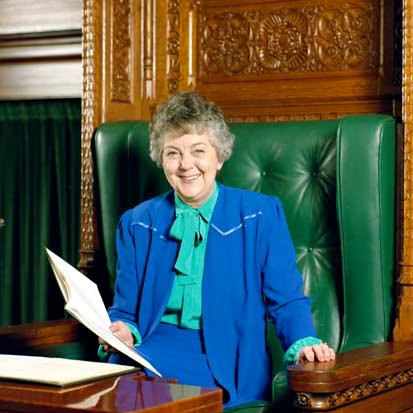
Political history is often shaped by individuals who break barriers and create opportunities for future generations. In Australia, Joan Child stands out as one of those transformative figures. Best known as the first woman to serve as Speaker of the Australian House of Representatives, Joan Child played a crucial role in advancing women’s representation in Australian politics.
Her journey from a working-class background to one of the highest parliamentary positions in the country is both inspiring and historically significant. This article explores Joan Child’s life, political career, major achievements, leadership style, and lasting impact on Australian democracy. Whether you are researching Australian political history or simply curious about influential female leaders, this comprehensive guide provides valuable insights into Joan Child’s remarkable legacy.
Joan Child Biography
| Attribute | Details |
|---|---|
| Full Name | Gloria Joan Liles Child AO |
| Common Name | Joan Child |
| Date of Birth | August 3, 1921 |
| Place of Birth | Kew, Melbourne, Victoria, Australia |
| Date of Death | February 23, 2013 |
| Nationality | Australian |
| Political Party | Australian Labor Party (ALP) |
| Profession | Politician |
| Notable Achievement | First Female Speaker of the Australian House of Representatives |
| Years Active | 1974–1990 |
| Honors | Officer of the Order of Australia (AO) |
| Legacy | Pioneer for women in Australian politics |
Featured Snippet Answer
Joan Child was an Australian politician and member of the Australian Labor Party who became the first woman to serve as Speaker of the House of Representatives in 1986. She is remembered for breaking gender barriers in Australian politics, advocating democratic values, and paving the way for future generations of female political leaders.
Who Was Joan Child?
Joan Child was one of Australia’s most influential political pioneers. Her career represented a major turning point for women seeking leadership roles in government.
A Trailblazer in Australian Politics
Before Joan Child entered federal politics, women were significantly underrepresented in Australia’s parliamentary system. Her election to the House of Representatives helped challenge longstanding barriers.
She became known for:
- Strong leadership
- Determination and resilience
- Commitment to democratic institutions
- Advocacy for greater inclusion
Why Joan Child Matters Today
Even decades after her political career, Joan Child remains relevant because her achievements continue to inspire discussions about equality and representation.
Her legacy demonstrates that:
- Leadership opportunities should be accessible to everyone.
- Diversity strengthens democratic institutions.
- Persistence can overcome systemic barriers.
These lessons continue to influence political discussions in Australia and beyond.
Early Life and Background
Understanding Joan Child’s impact requires a look at the experiences that shaped her character.
Childhood and Education
Born in Kew, Melbourne, in 1921, Joan Child grew up during a period marked by economic challenges and social change. She attended Camberwell Girls Grammar School before entering the workforce.
Unlike many political leaders from privileged backgrounds, Joan experienced the realities of everyday working life.
Overcoming Personal Challenges
Her early adulthood included significant personal hardships.
After becoming widowed at a relatively young age, she was left to raise five sons while supporting her family financially.
During this period, she worked in various occupations, including:
- Factory work
- Retail jobs
- Cleaning positions
- Food service roles
These experiences gave her a practical understanding of the challenges faced by ordinary Australians.
Lessons From Her Early Life
Joan Child’s background contributed to her political perspective by teaching:
- Self-reliance
- Hard work
- Compassion
- Determination
- Community responsibility
These values remained visible throughout her political career.
Joan Child’s Entry Into Politics
Joan Child’s path to Parliament was far from conventional.
Joining the Australian Labor Party
Her political involvement began through the Australian Labor Party (ALP), where she became active in grassroots political activities.
Her dedication and ability to connect with voters helped establish her reputation within the party.
Election to Parliament
In 1974, Joan Child achieved a historic milestone by becoming the first woman elected to the House of Representatives for the Australian Labor Party.
This achievement represented more than a personal victory. It symbolized progress for women seeking leadership roles in Australian politics.
Challenges Along the Way
Political careers rarely progress without setbacks.
After winning her seat in 1974, she lost it during the 1975 election. However, she refused to give up and successfully returned to Parliament in 1980.
Her perseverance highlights an important leadership lesson:
Success often requires resilience in the face of setbacks.

Career Highlights and Political Achievements
Joan Child’s parliamentary career included numerous accomplishments that strengthened her reputation as a respected leader.
Building Parliamentary Experience
During her years in Parliament, she gained recognition for:
- Professionalism
- Fairness
- Attention to detail
- Respect for parliamentary procedures
These qualities made her a trusted figure among colleagues from different political backgrounds.
Key Contributions
Some of her most notable contributions included:
- Promoting parliamentary accountability
- Supporting democratic processes
- Encouraging greater female participation in politics
- Strengthening legislative debate standards
Recognition Across Political Lines
One of Joan Child’s greatest strengths was her ability to earn respect from people with differing political views.
This bipartisan respect later became a major factor in her appointment as Speaker.
Becoming Australia’s First Female Speaker
Perhaps Joan Child’s most historic achievement came in 1986.
Breaking a Historic Barrier
On February 11, 1986, Joan Child became the first woman elected Speaker of the Australian House of Representatives.
This achievement was groundbreaking because no woman had previously held the role in Australia’s federal Parliament.
Responsibilities of the Speaker
The Speaker plays a critical role in Parliament by:
- Maintaining order during debates
- Enforcing parliamentary rules
- Protecting democratic procedures
- Ensuring fairness among members
The position requires neutrality, professionalism, and strong leadership skills.
Why Her Appointment Was Significant
Her election represented progress in several areas:
- Gender equality
- Political representation
- Leadership opportunities
- Institutional modernization
Many Australians viewed her appointment as a powerful symbol of changing attitudes toward women in leadership.
Leadership Style and Public Reputation
Joan Child’s leadership style contributed significantly to her success.
Key Characteristics
Observers frequently described her as:
- Fair
- Respectful
- Determined
- Professional
- Principled
These traits helped her navigate complex parliamentary situations.
Famous Perspective on Leadership
One memorable example of her confidence came when questions arose regarding traditional Speaker attire.
Rather than relying on symbolic clothing to command respect, Joan emphasized that dignity came from personal character and conduct.
This response became one of the defining moments of her public image.
Leadership Lessons From Joan Child
Modern leaders can learn valuable lessons from her example:
- Lead through integrity.
- Earn respect through actions.
- Stay committed to principles.
- Remain resilient during setbacks.
- Focus on long-term goals.
Joan Child’s Impact on Women in Politics
Joan Child’s influence extends far beyond her individual achievements.
Opening Doors for Future Leaders
Her success demonstrated that women could effectively hold senior parliamentary positions.
This achievement encouraged more women to pursue political careers.
Long-Term Effects
Over time, Australia has seen increasing numbers of women serving in leadership roles across government.
While progress involved many contributors, Joan Child remains one of the most important pioneers.
Comparison: Before and After Joan Child
| Area | Before Joan Child | After Joan Child |
| Female Leadership Visibility | Limited | Significantly Increased |
| Role Models for Women | Few National Examples | Stronger Representation |
| Public Perception | Traditional Expectations | Growing Acceptance |
| Parliamentary Diversity | Lower | Improved Over Time |
Her influence helped shape a more inclusive political environment.
Awards, Recognition, and Legacy
Joan Child’s contributions did not go unnoticed.
Major Honors
Among her most notable recognitions:
- Officer of the Order of Australia (AO)
- Induction into the Victorian Honour Roll of Women
- Recognition as a parliamentary pioneer
These honors reflect her lasting importance to Australian society.
Historical Legacy
Today, Joan Child is remembered for:
- Breaking political barriers
- Strengthening democratic institutions
- Promoting equal opportunity
- Inspiring future generations
Her story remains an important chapter in Australia’s political history.
Pros and Cons of Joan Child’s Political Legacy
Pros
- Broke gender barriers in Parliament
- Inspired future female leaders
- Strengthened parliamentary traditions
- Promoted democratic values
- Earned bipartisan respect
Cons
- Faced institutional resistance common to pioneering leaders
- Operated within a political environment where broader gender equality challenges remained unresolved
- Some reforms required decades to achieve full impact
Despite these challenges, her contributions overwhelmingly strengthened Australian political life.
Key Lessons From Joan Child’s Career
Joan Child’s life offers several practical lessons:
Professional Lessons
- Hard work creates opportunities.
- Persistence matters after setbacks.
- Leadership requires fairness.
- Integrity builds trust.
Personal Lessons
- Adversity can build strength.
- Family responsibilities and professional success can coexist.
- Positive change often begins with one person taking action.
These lessons explain why her story continues to resonate with readers today.
Also Read: JoAnn Sklarski Explained: Life Beyond the Spotlight
Conclusion
Joan Child’s journey from a working-class widow raising five children to becoming Australia’s first female Speaker of the House of Representatives is one of the most inspiring stories in the nation’s political history. Her career was defined by determination, professionalism, resilience, and a commitment to democratic values.
More importantly, her achievements helped transform perceptions of women’s leadership in government and opened doors for future generations. Today, Joan Child is remembered not only for the positions she held but also for the barriers she broke and the example she set. Her legacy continues to inspire leaders, students, and citizens who believe in equal opportunity, perseverance, and public service.
FAQs
Who was Joan Child?
Joan Child was an Australian Labor Party politician who became the first woman to serve as Speaker of the Australian House of Representatives. She is remembered as a pioneer who helped increase opportunities for women in Australian politics.
Why is Joan Child important in Australian history?
Joan Child is important because she broke significant gender barriers in federal politics. Her election as the first female Speaker demonstrated that women could successfully occupy senior parliamentary leadership positions and helped inspire future generations.
When did Joan Child become Speaker of the House?
Joan Child became Speaker of the Australian House of Representatives on February 11, 1986. Her appointment marked a historic milestone for women in Australian political leadership.
What political party did Joan Child belong to?
Joan Child was a member of the Australian Labor Party (ALP). She became the first woman elected to the House of Representatives on behalf of the party, making history in Australian politics.
What challenges did Joan Child face?
Joan Child faced personal and professional challenges, including raising five sons after becoming widowed and overcoming barriers faced by women in politics during the twentieth century. Her resilience became one of her defining qualities.
What is Joan Child’s legacy today?
Joan Child’s legacy includes breaking barriers for women, strengthening democratic institutions, and inspiring future leaders. She remains one of Australia’s most respected political pioneers and a symbol of progress in public service.